
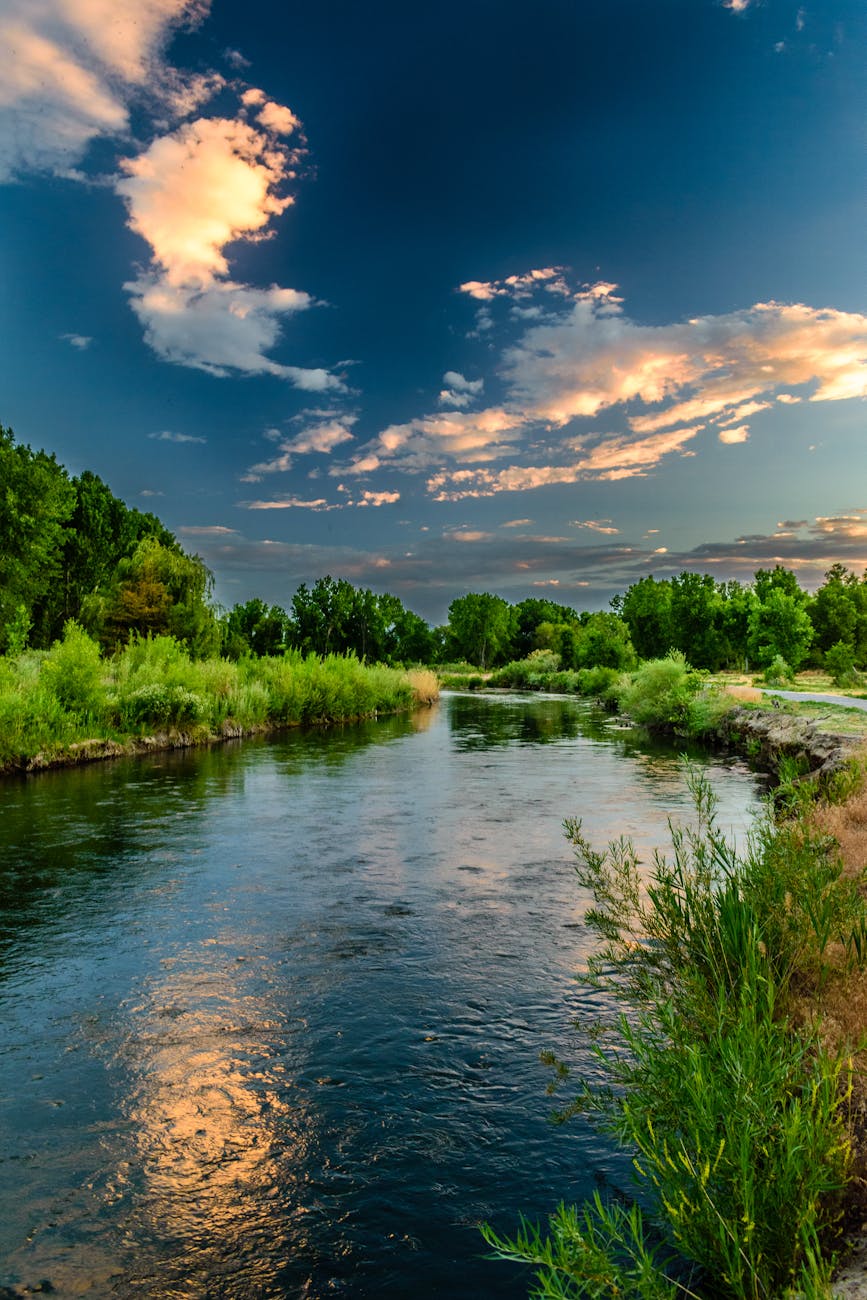
Even across cultural and spiritual boundaries, many belief systems include a code of ethics with which to approach the natural environment, including plants and animals. Marked differences in how they arrive at that conclusion- that we should take good care of the natural world- don’t negate that responsibility human beings have to the physical world.
Finding Sacred Ground: How Christian Stewardship and Indigenous Animism Converge
At first glance, the Abrahamic concept of Christian stewardship and the multifaceted worldview of Indigenous Animism appear worlds apart. One rooted in a belief in a transcendent creator God who entrusts humanity with care for His creation, the other often perceiving immanent spirits and life forces within every rock, river, and tree.
Yet, a deeper, more surprising insight reveals a profound commonality: both traditions, in their purest forms, cultivate an ethical framework that fosters a sacred responsibility to the natural world, urging humans to live in respectful, reciprocal relationship with all of creation.
This shared emphasis on interconnectedness and accountable interaction, despite divergent theological origins, offers a powerful testament to the universal human need to find meaning and purpose in our relationship with the Earth.
Christian stewardship, as articulated in Genesis 2:15, calls humanity to “work and take care of” the Garden. This isn’t a mandate for dominion through exploitation, but rather a charge for responsible management, mirroring God’s own creative care. The Hebrew words ‘avad (to serve, to work) and shamar (to guard, to keep, to preserve) imply a partnership, a faithful oversight of something that ultimately belongs to God. This perspective moves beyond mere conservation; it frames environmental care as an act of worship, a tangible expression of love for the Creator through reverence for His handiwork. It challenges believers to see nature not as a resource for unfettered consumption, but as a sacred trust, demanding wisdom, humility, and long-term vision.
Indigenous Animism, conversely, operates from the premise that the natural world is not merely alive, but inherently sacred, populated by sentient beings and spirits who demand respect and offer guidance. A mountain isn’t just a geological formation; it’s an elder, or an ancestor a source of wisdom or power. A river isn’t just water; it’s a living being with its own will and needs. This perspective creates a social and ethical relationship with the non-human world, where actions are guided by principles of reciprocity and maintaining balance within an interconnected community of “persons”—human and non-human. Offending a spirit of the land can lead to misfortune, while showing respect can bring blessings, weaving daily life deeply into the fabric of the ecosystem.
The surprising convergence lies in the outcome of these distinct belief systems. Both, when authentically practiced, lead to a strong ethical imperative for environmental protection and sustainable living. Whether driven by the mandate to honor a Creator God by tending His garden, or by the need to maintain harmonious relationships with the spirits of the land, the practical result is often a profound reverence for nature. Both worldviews reject the notion of humanity as separate from or superior to the rest of creation, instead placing humans within a web of life where their actions carry significant spiritual and practical consequences. This shared ethical bedrock, fostering ecological consciousness, serves as a powerful bridge between seemingly disparate spiritual paths.
Ultimately, both Christian stewardship and Indigenous Animism challenge the modern tendency to view nature as a mere commodity. They invite us back to a time-honored understanding that the Earth is alive, sacred, and deserving of our deepest respect and care.
By recognizing this shared wisdom, we can begin to heal our fractured relationship with the planet, drawing strength from diverse spiritual traditions to inspire a more sustainable and harmonious future.
Journal Prompts for a Nature Walk:
- As you encounter a particular tree, or body of water, pause and imagine it not just as an object, but as a living entity. What story might it tell if it could speak? What wisdom might it hold from the years it has stood or flowed?
- Choose a small piece of the natural world – a leaf, a stone, a patch of moss. Spend five minutes drawing it in silence. What intricate details did you notice that you typically overlook? How does this small part connect to the larger ecosystem around it?
- Reflect on a specific way you used or consumed a natural resource today. Make a list of natural resources you’re grateful for right now.
- Find the oldest-looking tree, rock, or slow-moving stream you can. If this entity could transfer its memories to you, what three non-human values or lessons would you absorb? How would embracing these long-term perspectives change a current, short-term goal of yours?
- As you walk, observe where natural boundaries exist—the edge of a path, the meeting of water and land, the line of a shadow. Do these boundaries seem rigid or fluid? What happens along these boundaries?
- You love the color indigo—the sky during a thunderstorm. Look up and around you. Where do you find unexpected shades of power, intensity, or mysterious depth in the everyday colors of nature? Write a short, evocative poem about this “indigo moment” in your walk.





 Hope Beyond Dope: Realistic Recovery from Addictions and Mental Illness
Leave a comment