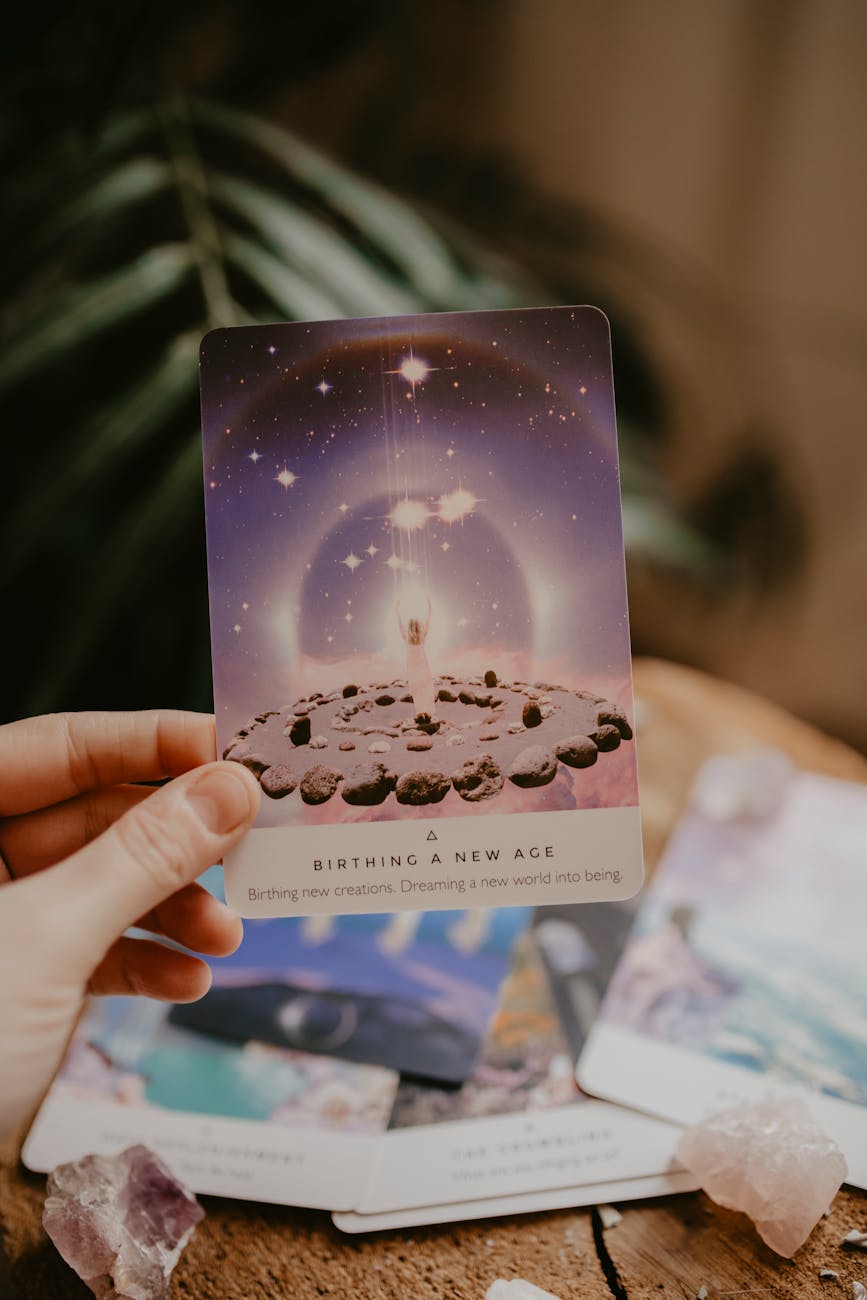
Here is our guide for the total beginner, to getting started with tarot cards as a method of divination.
Divination is a practice of accessing the subconscious and the spirit realm for getting some guidance, insight, and creative inspiration.
You can ask questions ranging from: does he like me? to… What am I embodying?
It’s important to note for our Christian friends that the Bible does warn against divination.
Deuteronomy 18:10–12 (NIV):
“Let no one be found among you who sacrifices their son or daughter in the fire, who practices divination or sorcery, interprets omens, engages in witchcraft, or casts spells, or who is a medium or spiritist or who consults the dead. Anyone who does these things is detestable to the Lord…”
This is, of course, in the Old Testament. Some scholars argue that Old Testament laws were designed to keep Hebrew people safe in the ancient world- and should not always be interpreted literally in today’s world under the new covenant. If you’re Christian, you will have to commune with God and ultimately decide for yourself if divination is something you’re comfortable with.
But for those of us who are agnostic or have chosen a different spiritual path, here is a detailed explanation of tarot cards, how they work, and how to use them. I hope you find it empowering.
If you have any questions feel free to comment. I reply to all comments!
What do the cards represent?
Tarot cards are a mirror of the current circumstance. A tarot reading doesn’t predict or determine the future- it simply reveals to you what pathway you are currently on.
Each card in a traditional tarot deck is associated with an archetype, an element, and a zodiac sign.
The symbols in the artwork have spiritual meanings. So don’t forget to pay attention to the artwork on each card.
So a traditional tarot deck is a set of 78 cards, each with its own unique imagery and story.
The deck is divided into two main sections:
- Major Arcana: This consists of 22 cards that represent significant life events and spiritual lessons. Examples include The Fool, The Magician, and The High Priestess.
- Minor Arcana: This includes 56 cards divided into four suits: Wands, Cups, Swords, and Pentacles. Each suit has 14 cards, including ten numbered cards and four court cards (Page, Knight, Queen, and King). For example, you may draw the 2 of Wands, the Ace of Swords, the 8 of Cups, the Knight of Pentacles…
To look up the meaning of each individual card, bookmark this resource: https://tarotgaze.com/tarot-cards/
How do they work?
Tarot cards are used for divination, self-reflection, and spiritual guidance. Here’s a basic overview of how they work:
- Shuffling and Drawing: The reader shuffles the deck while focusing on a question or situation. Cards are then drawn and laid out in a specific pattern called a “spread”.
- Interpreting the Cards: Each card’s meaning is interpreted based on its imagery, position in the spread, and the reader’s intuition.
- Gaining Insight: The combination of cards in a spread provides insights and guidance related to the question or situation. It’s less about predicting the future and more about tapping into the subconscious mind and intuition. You’ll learn a lot about yourself.
Tarot can be a powerful tool for personal growth, decision-making, and understanding life’s challenges. It can reveal a lot to you about your attitude, approach, and how aligned your choices are with your goals and values.
Some Tarot Card Spread Ideas
There are a few types of tarot card spreads we recommend.
For daily readings, draw one card for what you are “thinking”, one card for what you are “feeling”, and one card for what you are “doing”.
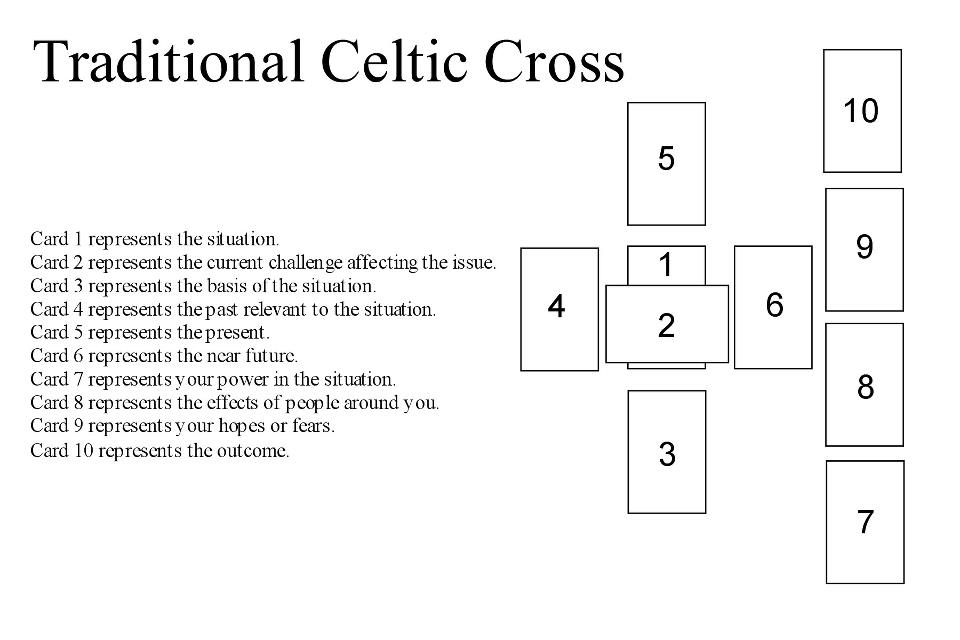
To understand a particular situation in-depth, try the Celtic Cross spread. The Celtic Cross spread is one of the most popular and comprehensive tarot spreads. It consists of ten cards, each representing different aspects of the querent’s situation or question. Here’s a breakdown of the positions and their meanings:
For love and romance readings, here are a few great options:
You can do a relationship spread. Select 1 card for each person in the relationship. Then choose a final card to represent the relationship as a whole.
You can also do a compatibility spread. Draw one card for your own desires, another card for what they desire, and a third card representing your comparability.
For other questions, you can do any kind of combination you want. Create your own spreads. You can ask questions like, “What do I need?” or “What am I experiencing today?” or “How can I improve this situation?” and then draw a card for the answer.
Recommended Traditional Tarot Decks
Q&A : Does my tarot deck need to be gifted to me? How can I choose the right deck for me?
Some people believe your first tarot deck should be gifted to you. In my experience, the deck is more potent if it is gifted to you by a fellow spiritualist- but they can still work well when you buy them for yourself.
If the traditional deck I recommended above isn’t right for you, here are some other options:
For tech-oriented people, or people that will forget to draw a card each morning: the phone app, Labyrinthos, is customizable. It will give you a variety of tarot readings. It’s available on both the Android Play Store and the Apple App Store. We highly recommend this app. I have upgraded to premium and find it to be totally worth it.
For other physical decks: Search Amazon and Etsy for tarot decks and select one that speaks to you. You can find extra affordable tarot decks on Temu, if you’re short on cash.
What are “Oracle decks”?
- Structure: Unlike tarot decks, which have a fixed structure of 78 cards divided into Major and Minor Arcana, oracle decks can vary widely in the number of cards and their themes.
- Flexibility: Oracle cards are more flexible in their design and interpretation. Each deck is unique, with its own set of meanings and messages created by the deck’s author.
- Imagery and Themes: The imagery and themes of oracle decks can be highly varied, ranging from angels and spirit animals to affirmations and moral guidance.
Recommended Oracle Decks
Beyond traditional tarot decks, it can be fun to get a spirit guide animal or a plant deck, for example.
This is my favorite oracle deck right now. It’s called Seeds of Stardust and I feel really aligned with my purpose when I’m using it.
The Oracle of Delphi is a mystical Oracle deck that is beautiful and accurate in our experience.
You could try the “What’s the Tea?” oracle deck for information about social situations (including love readings and friendships)
Additional Resources
I hope this provided some insight into the practice of tarot and how it can provide some useful depth and insight to your life.
If you enjoy discussing : recovery, creativity, spirituality, and mental health, please subscribe to our blog!




 Hope Beyond Dope: Realistic Recovery from Addictions and Mental Illness
Leave a comment