
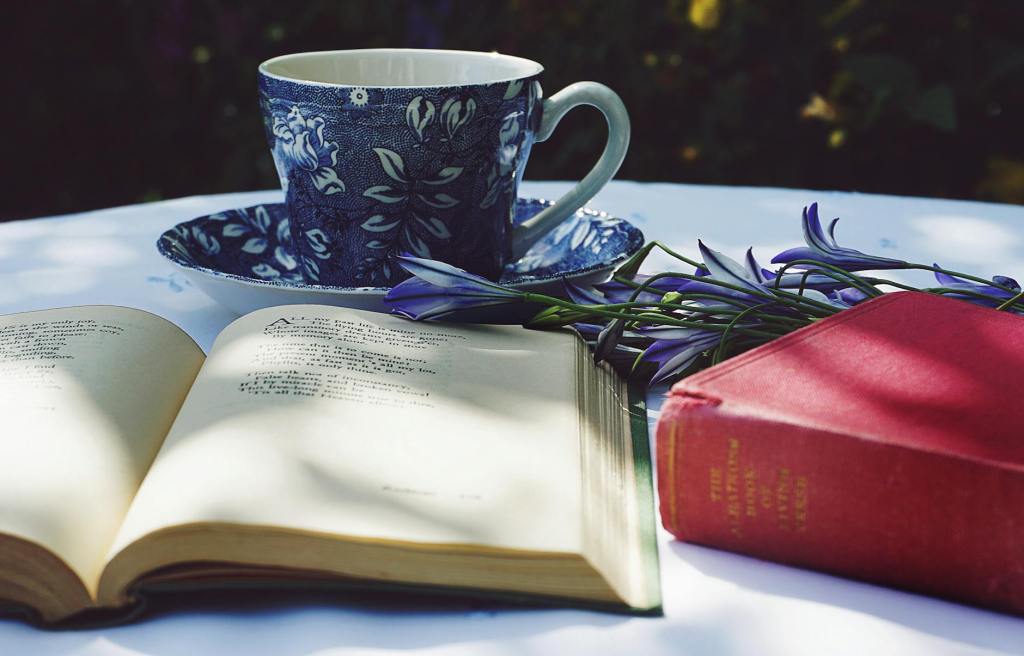
Here is a beginner’s guide to start writing poetry tonight, which can be deeply healing and fulfilling.
No experience is required.
What makes a poem?
“Poetry is thoughts that breathe, and words that burn.” Thomas Gray.
Officially, a poem is “a piece of writing in which the words are arranged in separate lines, often ending in rhyme, and are chosen for their sound and for the images and ideas they suggest.” (Cambridge English Dictionary)
The poem does not have to rhyme, but the words should be carefully arranged. Pay attention to how you want to express yourself, where you want to end each line, and if you want to include rhyme, do so.
Often a good poem contains gut-wrenching emotions, sensory details, and artistic expression.
For new writers hoping to find their own style and voice, the following method of finding and reinterpreting poems can really help you understand what you like about poetry, and what you want to say as a writer.
A Method for Writing Your First Poem
- Search online and find a famous poem that calls out to you. One that you find interesting.
- Now choose a topic or a perspective that the poem reminds you of.
- Rewrite the famous poem in your own words. Go word by word, and replace each one with how you would say it.
- Try to pay attention to the choices the original author made, and then the choices you ultimately make. If you really want to learn more about poetry, you can think about the following questions:
- Which words here really hit home?
- Are there details of the five senses in these poems?
- Is there a character in the poem, telling their story? Or are you telling your story?
- Is there a theme- a deeper meaning behind what you’re saying?
- Is there a vibe or aesthetic that is captured by the poem? What’s the mood?
- Do you use symbolism or metaphors to express the situation you’re describing?
- What is the rhythm of the poem? You can find this by paying attention to the syllables or by reading it aloud to get a sense for the beat. Where should each line end to contribute to that rhythm? Will you include rhyme to create a sense of cohesion?
- Say what you want to say as specifically and as creatively as you can, but only use a few carefully chosen words.
Rewriting an existing poem in your own words provides structure, example, and helps with the fear of the blank page.
This tried and true method is a great way to write your first poem if you’re a bit nervous to get started. Once you can do this and get a finished product that you like, it’s easier to begin improvising on your own.
Here’s my example.
The original poem I chose was “Hope is a Feathered Thing” by Emily Dickinson.
“Hope” is the thing with feathers –
That perches in the soul –
And sings the tune without the words –
And never stops – at all –And sweetest – in the Gale – is heard –
And sore must be the storm –
That could abash the little Bird
That kept so many warm –I’ve heard it in the chillest land –
And on the strangest Sea –
Yet – never – in Extremity,
It asked a crumb – of me.
Now here is my version, written in my own words. I drew inspiration from the poem I read and then made my own decisions about what I wanted to say.
“Hope” scares me because it’s writhing,
scaled and burning with life,
and sings to me while I sleep
and never dares to show itself.
And sweeter than hope is stormy weather-
and sore I must be to embrace it-
It could sweep my resentments away-
that lock me into place.
I’ve heard it on ice-cold land-
and in messy deep sea dives-
Yet- alone- I face her
She’s frightened, real, and live.
You can write your first poem now and it doesn’t have to be perfect. You could even start by rewriting the lyrics to your favorite song. You’ve got this.
After writing your first poem, you could post it on the mobile app Poetizer to get feedback from other people! Or it can be a private process, just for yourself.
The goal is to enjoy expressing yourself- not to be perfect or “good at it” but simply to practice and learn and grow.
For daily inspiration, subscribe to our blog below. We post about the creative process and how it can heal past traumas.






Leave a comment